01 / The question
What should describe architecture in the LLM era?
The project did not begin with a company plan or a claim that the industry needed another file format. It began with a private question I could not leave alone:
If we were to design a system that could eventually take the place of IFC as the source an LLM reads and writes, what would it describe?
An LLM works best when it can see the relevant source, constraints, and intent in one context. A conventional building model can be extremely rich, but that richness also makes the complete model difficult to hold, inspect, and revise as one piece of text.
02 / Respecting IFC
A shared achievement—and a different question.
IFC is an extraordinary shared achievement. It gives disciplines and tools a common way to exchange building information, and Koyu does not pretend that decades of work can be dismissed.
The issue appears when IFC is treated as the editable source for this particular experiment. In practice, the file is often an object- and geometry-heavy account of what a building is: elements, placements, coordinates, and shapes. It can carry semantics and relationships too, but the resulting description is still dominated by the built output.
In the terms of this experiment, that is closer to describing a building than writing architecture. Geometry can tell us where a wall ended up. It does not necessarily preserve why two rooms meet, what the boundary between them must do, or where passage was intended.
03 / The reversal
Write the intent. Build the shape.
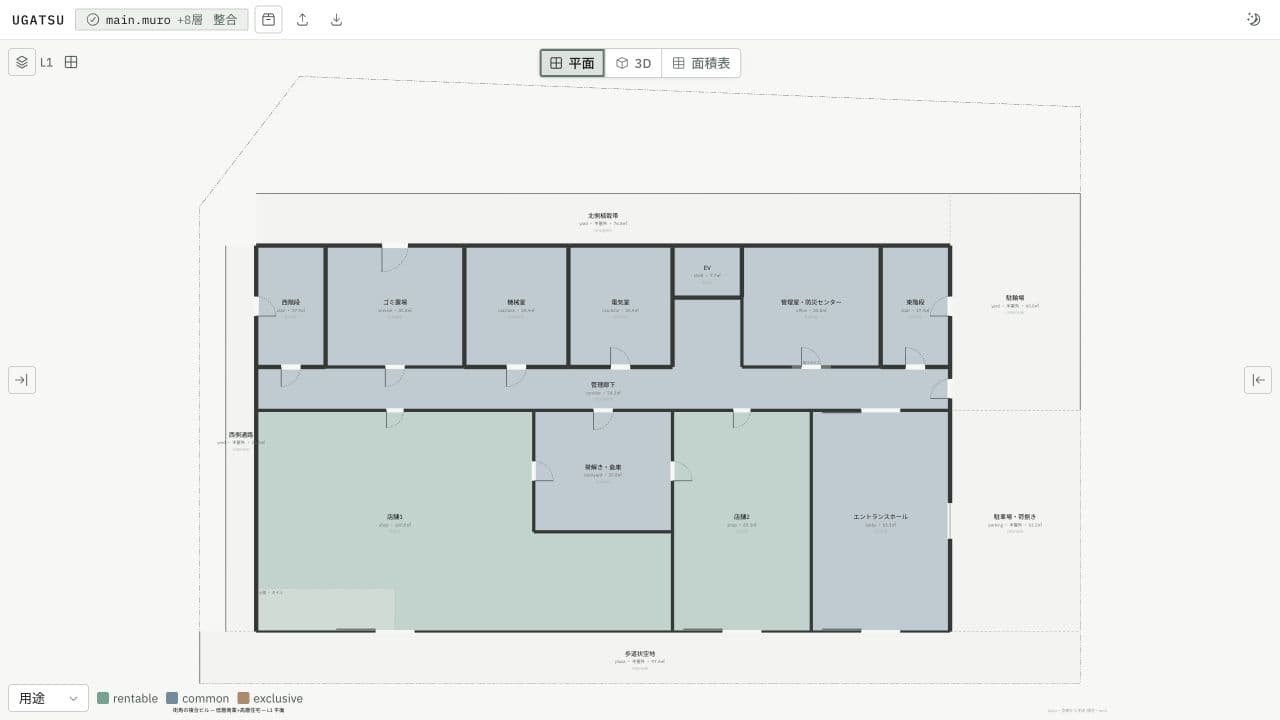
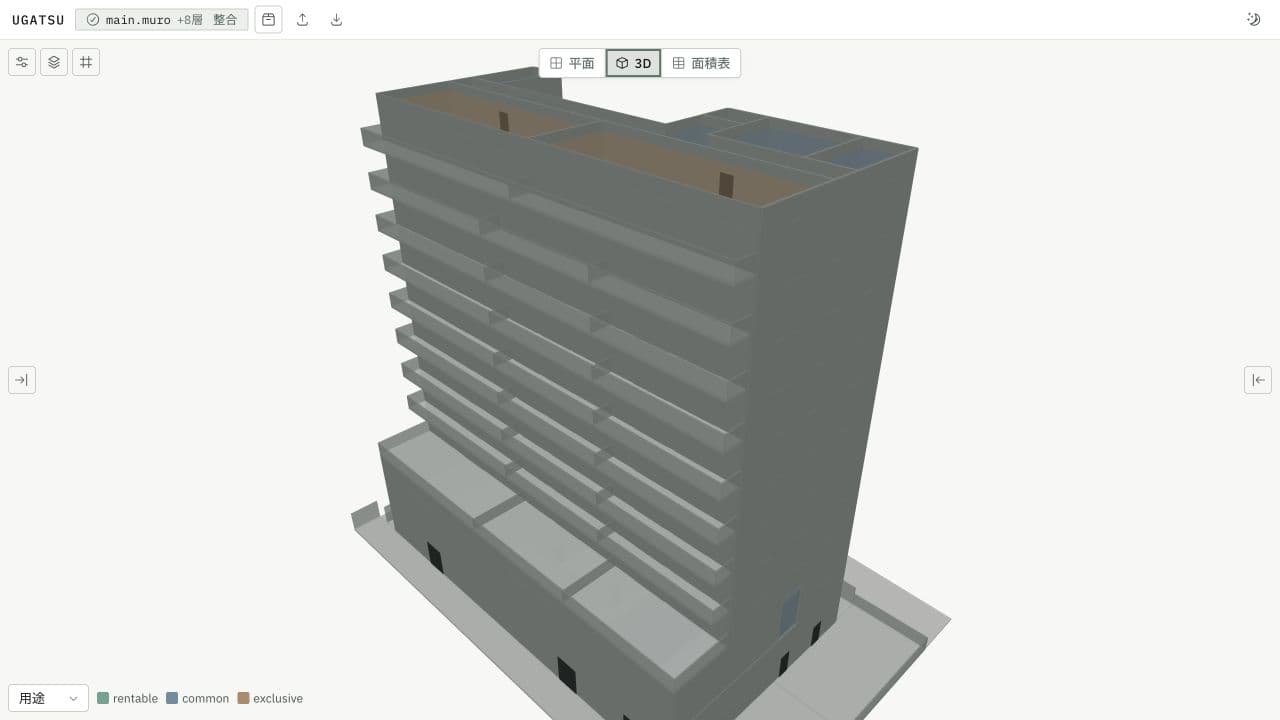
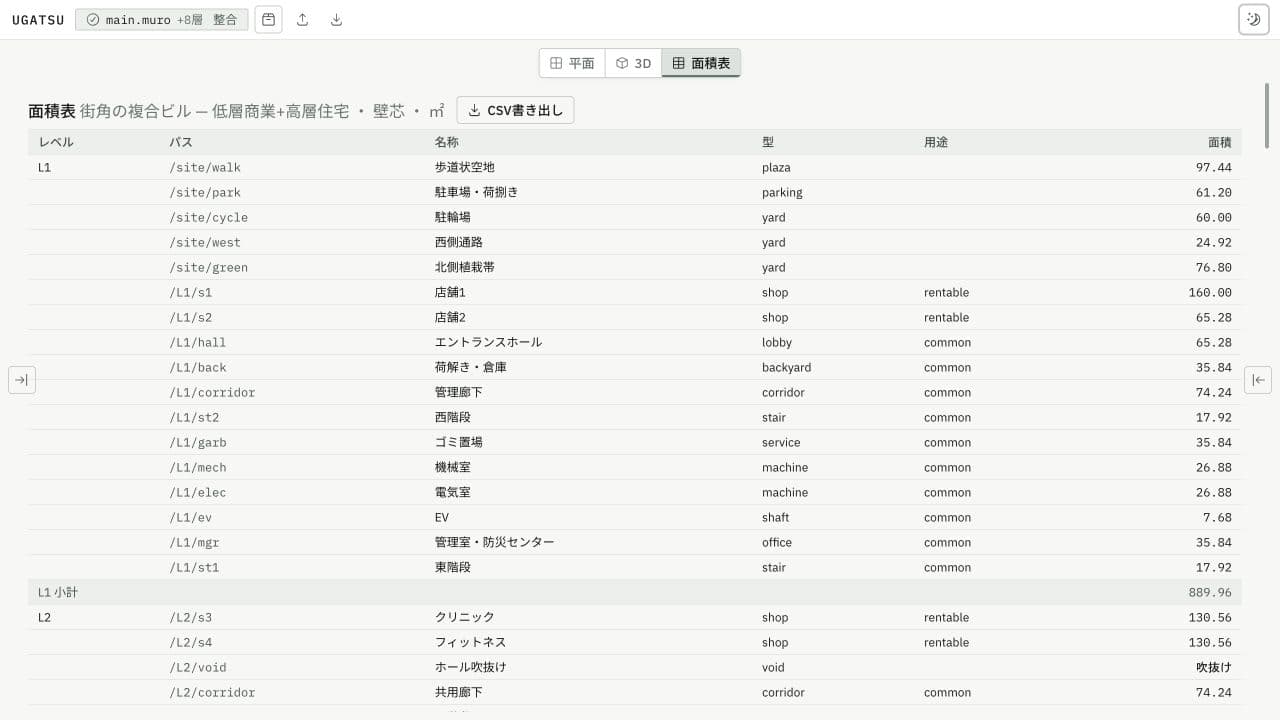
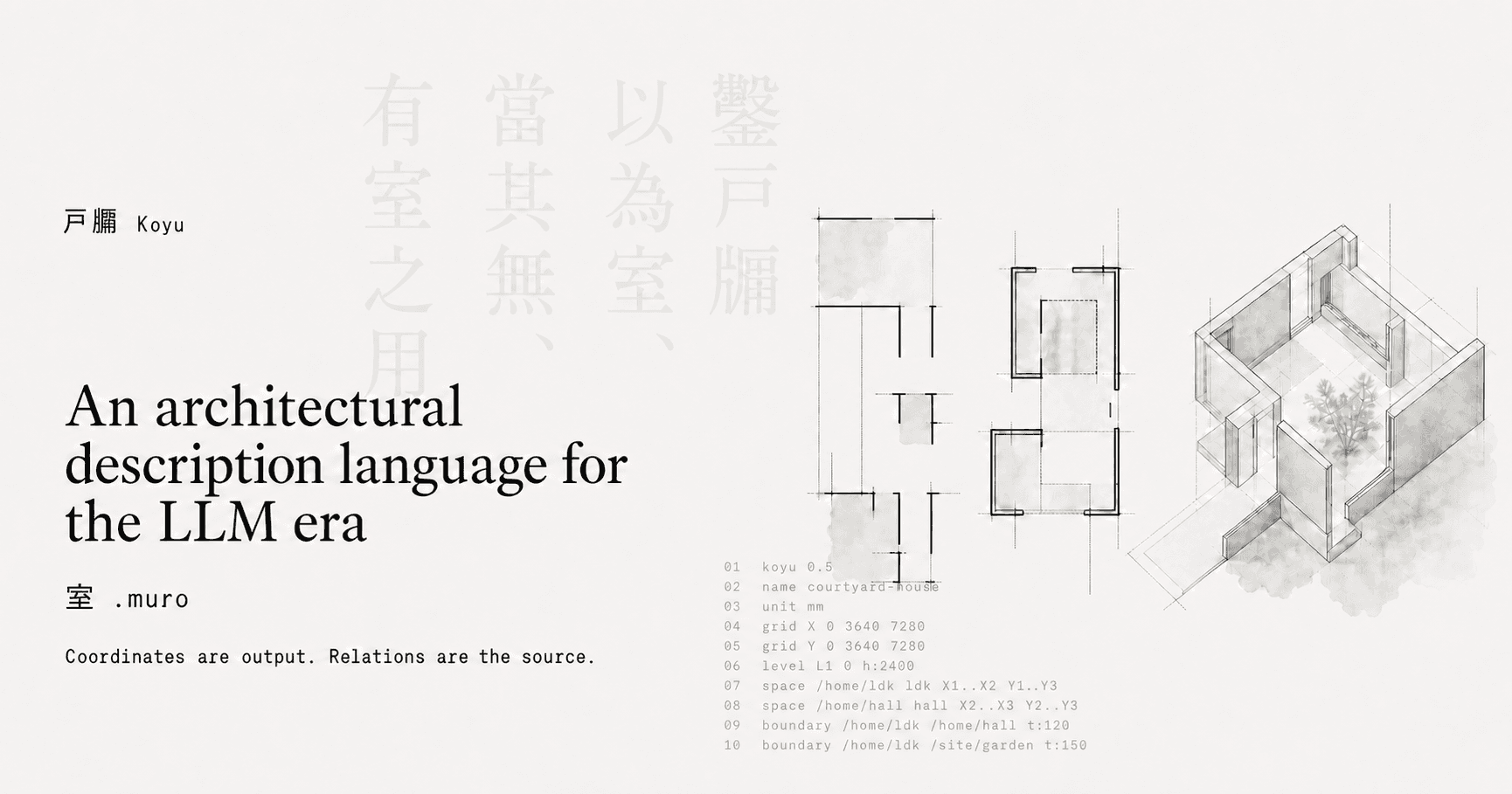
Koyu moves geometry from source to output. The source records spatial identity, adjacency, inclusion, boundary, opening, passage, and level. A compiler then derives plans, three-dimensional geometry, schedules, dimensions, and exchange forms.
architecture source
  = spaces
  + relations
  + boundaries
  + passages
  + levels

building geometry
  = build(architecture source)
This does not remove coordinates or precision. It changes their role. Coordinates remain available for inspection, exchange, and detailed adjustment; they are no longer the first sentence of the model.
鑿戸牖以為室、當其無、有室之用
“Cut doors and windows to make a room; its emptiness makes the room useful.” Koyu (戸牖) borrows the doors and windows; .muro takes the room (室) as its unit.
04 / One context
A whole building, in text an LLM can hold.
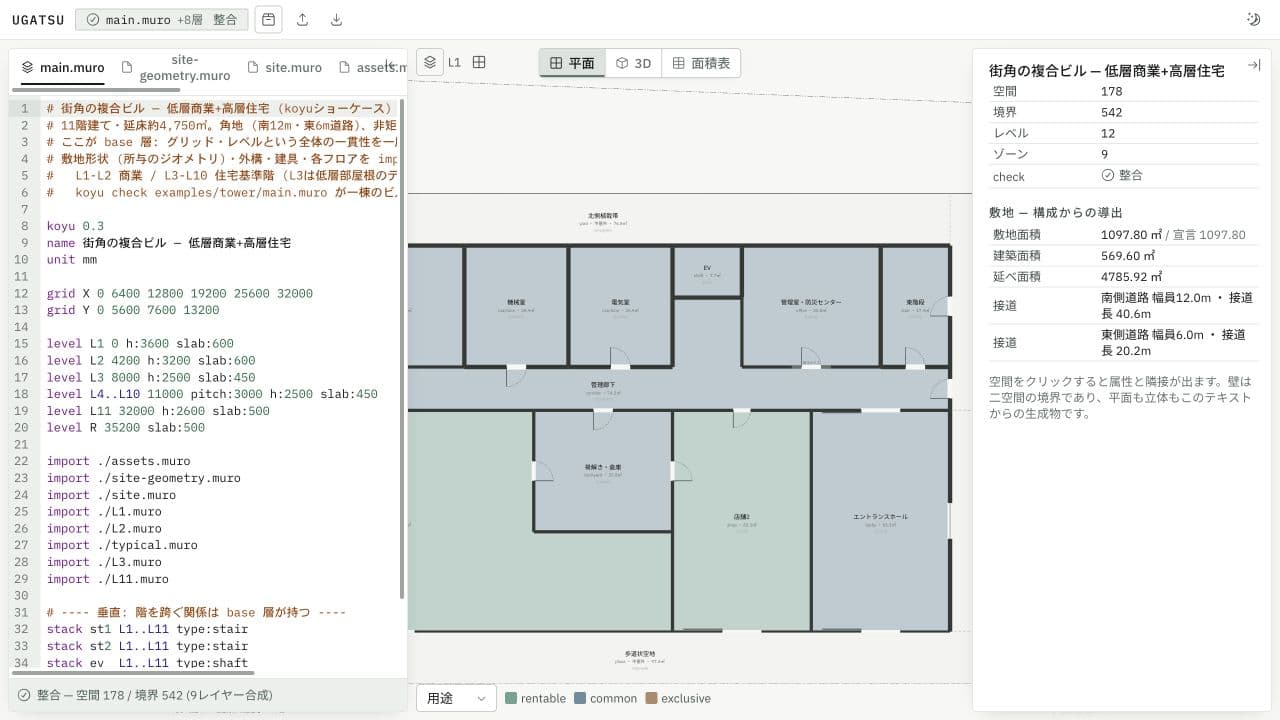
.muro is the compact source format produced by this idea. It describes levels, spaces, boundaries, doors, windows, imports, and vertical stacks as concise text. Human and LLM edits become the same kind of reviewable diff.
In the current comparison, the same idealized two-room scene takes 241 tokens in .muro and 3,379 tokens in a deliberately minimal IFC4 representation—a 14× difference. An 11-storey, 4,786 m² example building remains within 8,099 tokens in .muro.
These numbers are not a universal benchmark. They show the consequence of choosing a different source: when geometry is built rather than repeated, the description can stay small enough to be reasoned about as a whole.